Posted on

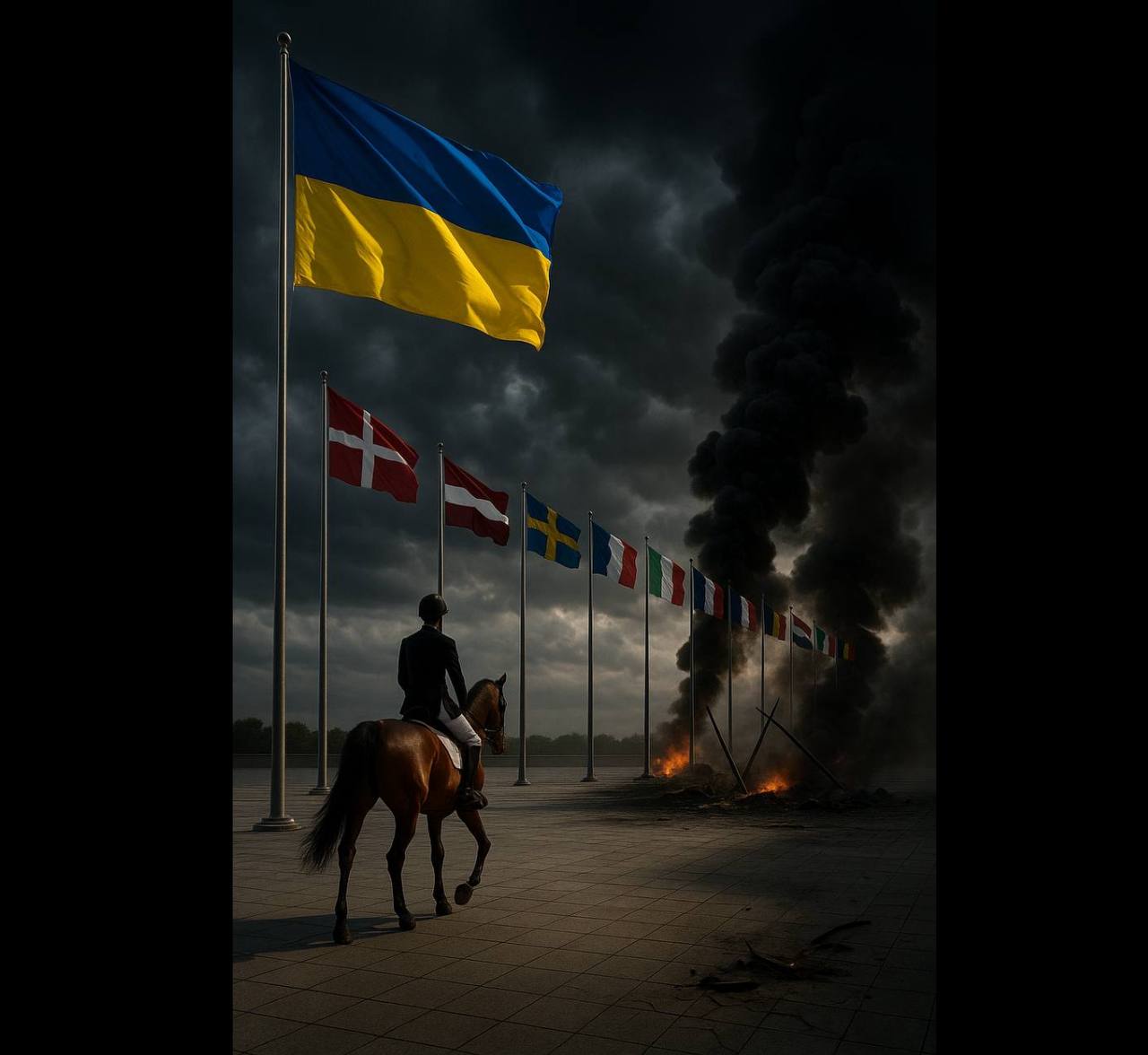
EEF has confirmed that it does not support allowing Russian and Belarusian athletes to take part in international competitions under a neutral status.

The European Equestrian Federation (EEF) has confirmed that it does not support allowing Russian and Belarusian athletes to take part in international competitions under a neutral status.

This stance was voiced following the FEI Board’s decision regarding the potential participation of athletes from Russia and Belarus as neutral competitors.

It is worth recalling that earlier, the Nordic and Baltic national federations — Denmark, Estonia, Finland, Latvia, Lithuania, Norway, and Sweden — expressed their solidarity with Ukraine by issuing a joint statement at the FEI General Assembly in Hong Kong.

We are sincerely grateful to our international partners for their consistency, principled stance, and support for Ukraine.

Together, we are stronger.

Posted on Leave a comment

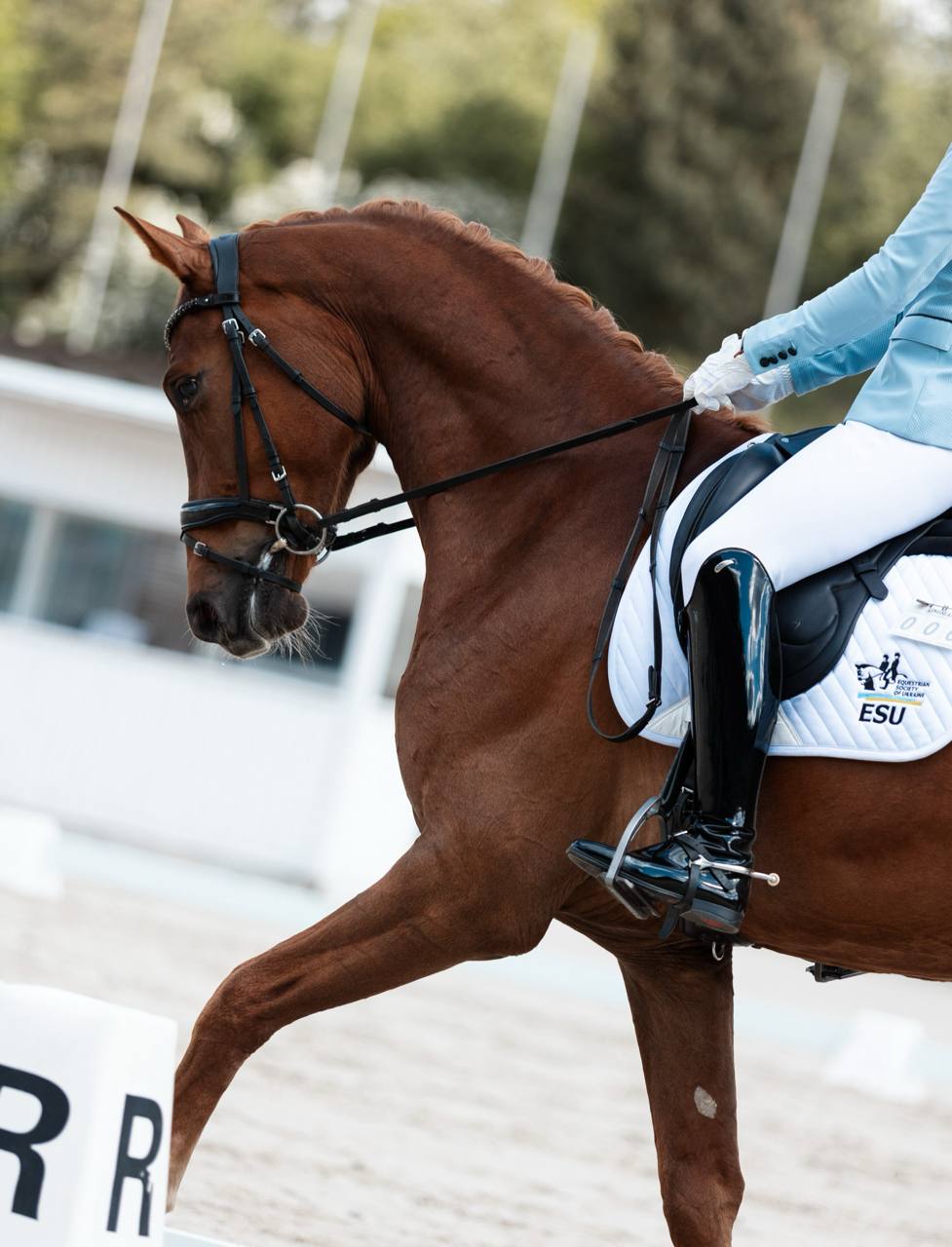
Dressage Is Not Boring

Dressage is not boring.
It is simply so complex, profound, and refined that it is often difficult to explain how it works.
One must feel and understand both oneself and the horse. It takes an immense amount of effort, patience, and dedication to achieve complete harmony, mutual understanding, and true connection with the horse — the foundation of correct and high-quality performance of the elements of the haute école of riding.

Dressage is the ballet of equestrian sport
a dance between horse and rider, both graceful and passionate, filled with harmony and energy, beauty and elevation.
Through dressage, the horse becomes calm, supple, flexible, and free in its movements — obedient yet confident, attentive yet energetic.
It allows the rider and horse to reach and express the ultimate form of mutual understanding between two beings.

Dressage is a subtle interaction between a well-trained horse and a well-trained rider.

Dressage is for connoisseurs —
for true appreciators of art, for the aristocracy, for the elite.
It is for those who, beyond the outward beauty of a gleaming, elegant horse and a proud rider dressed in a fine tailcoat and tall polished boots, can see — or wish to see — something deeper, something more.

Posted on Leave a comment

Riding with Two Reins – the Foundation of Correct Communication

It is very common to see riders being taught to turn their horse by simply “pulling the left or right rein.”
However, riding with two reins is the very foundation of correct riding.

If your horse reacts to the shortening of one rein by turning in that direction, how will you later explain what flexion is? Flexion is also achieved by taking up a rein. As a result, movements such as leg-yield, shoulder-in, and other lateral work will remain unavailable to you — or you will end up pulling on your horse’s mouth, trying to drag it into the desired direction with a bent neck while nudging its side with your heel. (We’ll talk more about this when we discuss flexion.)

And what about turns with counter-flexion? What will you do then?
Remember, our goal is to achieve light, almost invisible aids and refined communication.


What Happens When You Pull on One Rein

Let’s look at what actually happens when you pull your horse with one rein.

  1. You block the movement of the shoulder.
    By pulling the rein, you bring the horse’s shoulder backward — while the horse itself is moving forward. This immediately disrupts the rhythm.

  2. The horse turns on the forehand instead of through the body.
    The hindquarters swing out, the haunches lag behind, and at faster gaits the horse may even lose balance and fall to the side.
    In a correct turn, the horse should bend through its body and bring the inside hind leg underneath the body to maintain balance and unity of movement.

  3. You lose the possibility of correct flexion and contact.
    All those important exercises we mentioned become impossible to perform correctly.

So how do we tell the horse that we want to turn, if not by using our hands?


A Simple Left Turn (Without Flexion)

Let’s analyze a simple left turn without asking for flexion.

You’re riding in a straight line, with even contact on both reins.
These two reins, applying equal pressure to the corners of the horse’s mouth, create a “corridor” through which you ride your horse forward.

To turn, all you need to do is shift the corridor.

You turn your torso — keeping your shoulders parallel to the horse’s shoulders — but without increasing pressure on either rein.
Your arms follow your body naturally to the left, remaining soft and passive; you do not pull the inside rein.

The inside (left) leg at the girth asks the horse to bend through its body,
while the outside (right) leg prevents the hindquarters from swinging out, ensuring that the haunches follow the shoulders.

You will feel the horse come more firmly into the outside (right) rein, but you don’t give it away — both hands remain steady, with quiet wrists.

And that’s all.


The Result

Your horse will now begin to listen to your body, not just your hands.
It will stop turning in response to rein pressure alone, and you can confidently move on to working on flexion and more advanced lateral exercises.

Posted on Leave a comment

Eat the Dust – a social film

The main characters of the short film, which calls us to approach every choice in our life more consciously, including the choice of items of our own wardrobe – giving preference to ecologically clean ones produced without violence and testing on animals, were LAYAH, a long-time vegetarian and the main vegan of the country – Rudolph Kraevsky, who is the ideologist and founder of the Vegano Hooligano Family.

Posted on Leave a comment

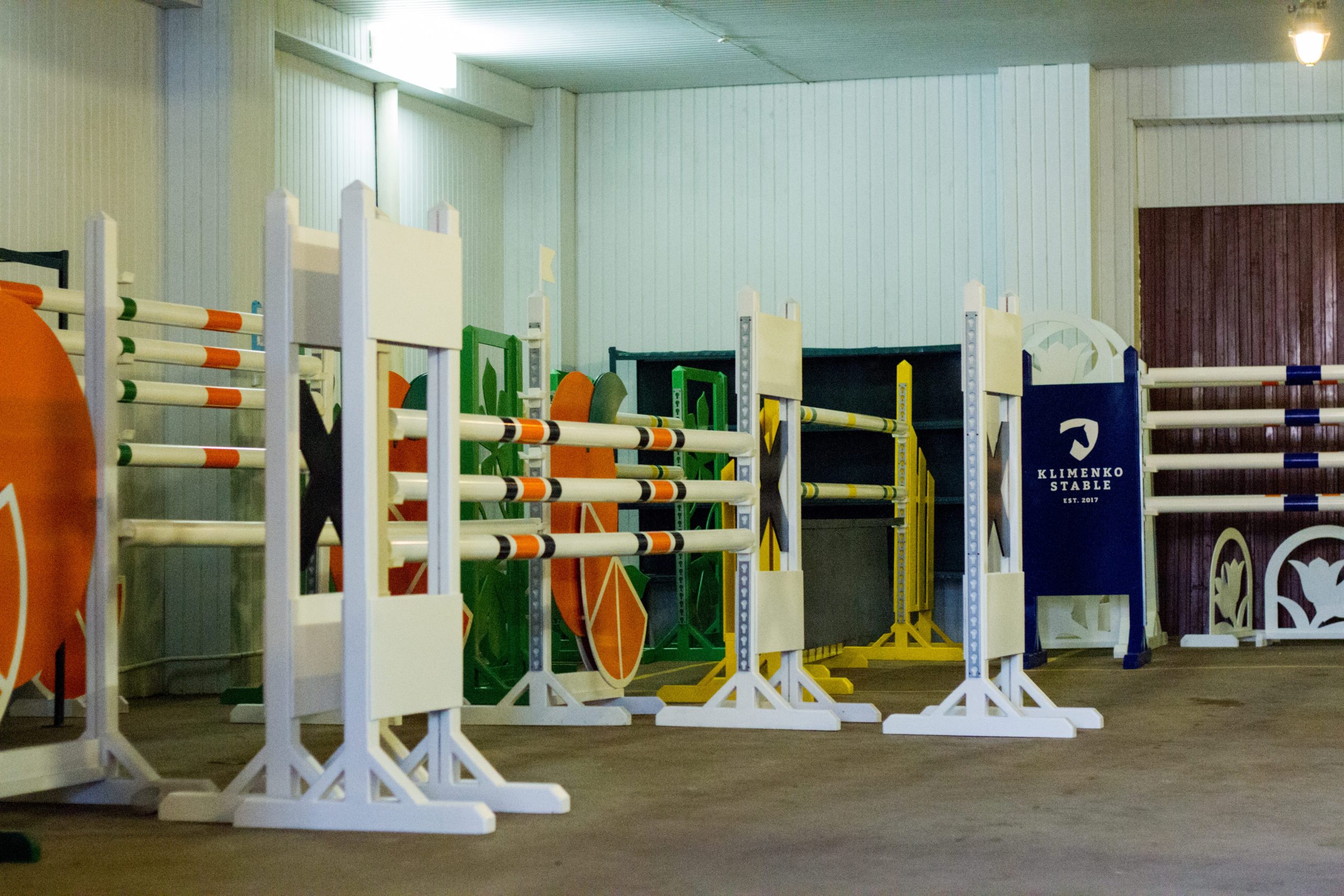
Production of Professional Show Jumping Obstacles

We offer a wide selection of show jumping obstacles for sale — from training sets to Grand Prix–level tournament courses!
We manufacture obstacles of any complexity, design custom layouts, and create bright, eye-catching promotional fences.

Obstacles are available in stock or made to order. You can purchase complete sets or individual elements (stands, wings, and safety poles).

For more details, visit the “Stable Equipment” section.

Posted on Leave a comment

Preparing for Equestrian Competitions: Practical Tips

Participating in tournaments is not only about demonstrating skill but also about testing discipline, attention to detail, and the level of readiness of both rider and horse. To perform confidently and with dignity, it’s important to prepare every piece of equipment in advance. No small detail should distract you from the main goal — harmonious and effective work with your horse in the arena or on the course.


Rider’s Competition Outfit: The Essential Minimum

As a coach, I advise my students to prepare their basic set well in advance — not the day before the start, but at least a week ahead. This allows time to test everything during training and make replacements or adjustments if needed. Ideally, every item should be tried in action.

1. White Breeches

White breeches are the standard for dressage, show jumping, and eventing. Choose models with an anatomical cut, high waist, and reinforced knee areas. They should be comfortable, non-chafing, and allow full freedom of movement.

2. Shirt or Show Blouse

The best choice is a model with a stand-up collar and short sleeves — breathable, quick-drying, and wrinkle-resistant. White remains the classic color that emphasizes posture and complies with tournament dress codes.

3. Stock Tie or Tie

A required element for dressage. It completes the look, adds neatness, and underlines a professional attitude. The stock tie should be neatly fastened and can be complemented with a pin or brooch.

4. Riding Jacket (Show Coat)

The show coat is the rider’s calling card. It must fit perfectly, not restrict movement, and match the competition style. Dark tones are traditional for dressage; some color variations are allowed in show jumping. The key principles are restraint, neatness, and comfort.

5. Helmet

No compromises here. The helmet must be safety-certified, fit perfectly, and be in good condition. Always check the straps, inner lining, and shell for damage before use.

6. Gloves

Choose gloves that provide sensitive contact with the reins. They shouldn’t slip or restrict finger movement. Black gloves are universal; white ones are more common in dressage.

7. Hair Accessories

For riders with long hair, a hairnet or clip is a must. It’s not only about appearance but also safety, preventing any distractions during the performance.

8. Spur Straps

If you use spurs, the straps should be secure, well-fitted, and non-chafing. Quality leather and durable fittings are a mark of professionalism.

9. Sports Underwear

Proper underwear is crucial for comfort. A seamless top that allows easy breathing, doesn’t press or restrict movement, helps maintain good posture and confidence during your ride.


Organizing Your Gear: A Professional Approach

I recommend preparing two separate packing options:

  • A garment bag for your show clothes — jacket, breeches, and shirt — to keep them clean and wrinkle-free.

  • A functional sports bag for everything else: helmet, gloves, spurs, spare shirt, hygiene items, and personal belongings.

It’s also helpful to make a checklist — even experienced riders sometimes forget small things like gloves or spurs due to pre-show nerves.


Conclusion

Preparing for a competition is not only physical work but also an organizational process. A clear system and attention to detail are key to calmness before the start and focus during the performance. Remember: a well-prepared kit is the first step toward a successful result.

If you need a personalized consultation on equipment selection or gear inspection before your start, feel free to reach out.

Posted on

Horse Leasing: Owner vs. Lessee — Who Really Benefits?

Let’s look at the most common scenarios of how cooperation between a horse owner and a lessee usually works — and what it looks like from both sides.
The Owner’s Perspective

At first, this person may have been just a regular rider or enthusiast who learned to ride and decided to try themselves in sport. Acting thoughtfully — often on their trainer’s advice — they realize that real progress requires having their own horse. Eventually, they buy one — young or experienced — their new four-legged friend.
The joy is boundless: they buy the best for the horse, care for it lovingly, and it quickly becomes part of the family. New responsibilities follow — finding the right stable, choosing a saddle, planning the competition season. But challenges arise too: lack of good veterinarians, feed or bedding issues, rising stable costs, misunderstandings with trainers or grooms. When the horse suddenly gets sick, the owner has to become a “junior vet,” holding the IV in one hand and the phone in the other if no help is nearby. They learn to recognize good shoeing, the cost of treating tendons, what good footing means, and who can be trusted with training — doing everything possible to keep their horse well. Then comes the “day X.”
Financial difficulties, business trips, studies, or personal circumstances make the owner consider selling or leasing the horse. Leasing seems like a reasonable option: it eases the financial burden, maybe even brings some income while the horse continues to work. Tournament results can increase the horse’s value, and the lessee may become a potential buyer — an ideal scenario. But reality can be different. After active competition, the horse may return injured, and the lessee simply moves on to another horse. The owner ends up breaking even at best, or deep in debt from treatment costs. Sometimes the horse can no longer compete at all. A sick horse won’t sell — and financial stress comes together with emotional pain.

The Lessee’s Perspective

Most riders reach a point where they realize: to truly progress, they need a horse that trains exclusively with them — whether owned or leased. Many are afraid of the full responsibility that comes with ownership, so leasing seems like the better choice. You can stop anytime without worrying about selling or paying for costly treatment — that’s the owner’s problem. You can ride one horse today, another tomorrow, or even take a break and go on vacation. However, leasing has its downsides.
First, a top-quality horse is rarely available for lease — and if it is, it either has issues or costs so much that after a year, you could’ve bought your own.
Second, the owner may interfere — disagreeing with your trainer, your stable choice, or training routine — after all, it’s their property.
Third, no matter how much time and effort you invest, the owner can take the horse back at any moment. You may spend money and energy, only for the horse to be sold or leased to someone else. So who wins this game? Hard to say. The owner takes the bigger risks — financially and emotionally. A horse worth €20,000 yesterday may be worth nothing tomorrow.

If You Decide to Lease Out Your Horse

There are three main approaches:

Keep control and train the horse yourself. Then you have no one to blame but yourself if something goes wrong.

Lease only to people you fully trust — a trainer or close friends. But remember: if issues arise, even strong relationships can break.

The legally safe option: Sign a lease agreement stating that the lessee is financially responsible for the horse’s health and must return it in the same condition. If the lessee is responsible, there will be no problems. The contract should include compensation for veterinary treatment and payment for downtime while the horse cannot work. If the person refuses to sign — don’t lease the horse.

Remember: any transportation, intensive training, or simple mistake can lead even to a horse’s death. That’s why the contract must include an insurance amount equal to the horse’s full value. Without a contract, you’ll only face new problems. Ask yourself: is it worth it? Sometimes it’s better to sell the horse — painful as that may be — than to later regret your own carelessness.
For consultations:  +38093-00-33-998Telegram / WhatsApp
Posted on Leave a comment

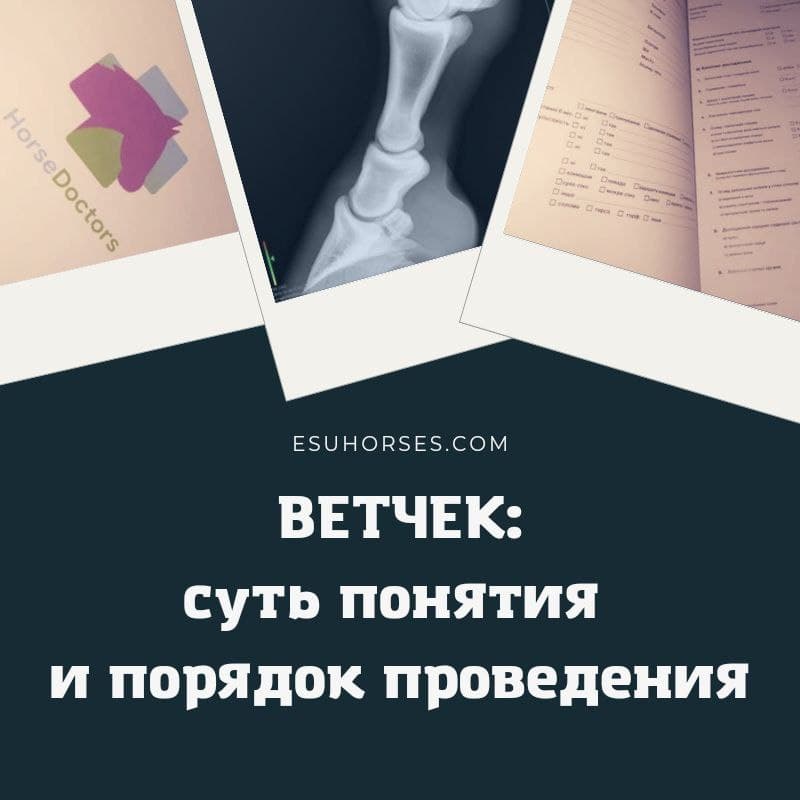
Vet Check in Ukraine: What It Is, Why It Matters, and Who Pays for It

In Ukraine, the topic of a vet check (pre-purchase veterinary examination) is becoming increasingly common among potential horse buyers. This trend is natural, as European standards are gradually shaping the rules of the equestrian market here.
So, what exactly is a vet check, when is it truly necessary, and how much does it cost? Let’s take a closer look.


What Is a Vet Check?

A vet check is a comprehensive pre-purchase veterinary examination of a horse’s health, which includes both clinical diagnostics and radiographic (X-ray) evaluation.

The procedure is carried out according to an official document — the Protocol of Clinical Examination of the Horse, which is printed, signed by the seller (or an authorized representative), and attached to the horse’s records upon completion.

The protocol includes:

  • Conditions under which the clinical and radiological examination is conducted

  • Information about the buyer (client) and the seller

  • Location and date of the exam

  • Names of all persons present

  • Detailed information about the horse

In the horse’s section, the following details are recorded:

  • Duration of ownership

  • Current use (competition, training, stall/turnout management, breeding)

  • Medications administered within the last six months

  • History of illness or lameness

  • Surgical procedures

  • Stereotypies (crib-biting, weaving, etc.)

  • Allergies or skin diseases

  • Housing conditions (stable, paddock, open housing)

  • Feeding system (dry hay, steamed hay, oats, pellets, etc.)

  • Bedding type (straw, shavings, peat, other)

Before the examination, the seller signs a declaration confirming that all information is provided truthfully and agrees, if necessary, to the removal of shoes and/or sedation of the horse.

The horse’s identification details are also listed — microchip number, markings (according to the passport or observed during the exam) — as well as the client’s comments on any existing conditions or performance-related concerns.


Clinical Examination

The vet assesses the horse’s overall condition and fitness, including:

  • Behavior and demeanor

  • Skin and coat (injuries, scars, swelling)

  • Rectal temperature

  • Palpation of the head (teeth, jawline, eyes, lymph nodes)

This is followed by:

  • Neurological evaluation

  • Respiratory system check (discharge, coughing, lung/trachea auscultation)

  • Cardiovascular assessment (pulse, heart auscultation, jugular vein)

  • Reproductive system check (external genitalia)


Orthopedic Examination

At rest:

  • Inspection/palpation of the neck, back, chest, abdomen, croup, and pelvis

  • Examination of all limbs (left/right, front/hind)

  • Hoof condition and presence of shoes

In motion:

  • Walk and trot on a hard surface

  • Flexion tests (1-minute per limb: LF, RF, LH, RH)

  • Movement in a figure-eight pattern to detect lameness or neurological signs

  • Movement on a circle on a hard surface

Under load (lunging, under saddle, or free movement):

  • Response to exercise (coughing, discharge, abnormal respiratory sounds)

  • Heart and respiratory rate (before, during, and 10 & 20 minutes after work)

Any abnormalities or reasons for stopping the exam are noted. If no issues are found that could affect general health or performance, this is also recorded.


Radiographic Examination

The standard X-ray set includes 16 images, taken according to European (German) standards:

Forelimbs:

  • Hooves (left & right)

  • Fetlocks (left & right)

  • Oxspring views of both hooves (using a metal block for correct angle)

Hindlimbs:

  • Fetlocks (left & right)

  • Hocks (two projections per leg at different angles)

  • Stifles (two projections per leg)

The protocol must indicate examination conditions, place and date, and include signatures from both client and veterinarian.

⚠️ Note: X-rays are performed following the German standard, meaning they can be interpreted by any qualified veterinarian both in Ukraine and abroad. Ukrainian vets are now fully capable of producing images at the correct diagnostic angles.


Who Pays for the Vet Check?

In Europe, when a horse is listed for sale, X-rays are almost always available in advance — it’s the first thing a potential buyer asks for.
If there are no X-rays, the horse is often not even considered, regardless of talent. The images may not always be recent, but their presence signals transparency and professionalism. Fresh X-rays can be done at the buyer’s request or by mutual agreement.

Having pre-existing X-rays demonstrates the seller’s serious attitude toward the horse’s health and builds buyer trust.

In Ukraine, a full vet check can cost around $400, which sometimes discourages sellers.
For horses priced up to $10,000, a basic veterinary inspection may suffice.
However, for horses in the $10,000+ range, it’s hard to justify asking €25,000–35,000 without even providing basic X-rays.

So, what should a buyer do if no vet check is available? Are they expected to pay for examinations of every horse they’re interested in?

The optimal solution is a shared arrangement:

  • If the vet check is clear — the buyer pays.

  • If health issues are found — the seller covers the costs.

This is common practice in Europe, especially when older X-rays exist but need updating.


Recommendations

We strongly recommend that all horse owners have their horses X-rayed at least once — both to ensure their health and to be prepared for a quick sale, whether in Ukraine or abroad.
Preventive diagnostics are always cheaper than treatment — and can save both time and money in the long run.

To schedule a vet check according to German standards, please contact: [phone numbers / messengers]

+380930033998, Instagram @esuhorses , esuhorses@gmail.com

Posted on Leave a comment

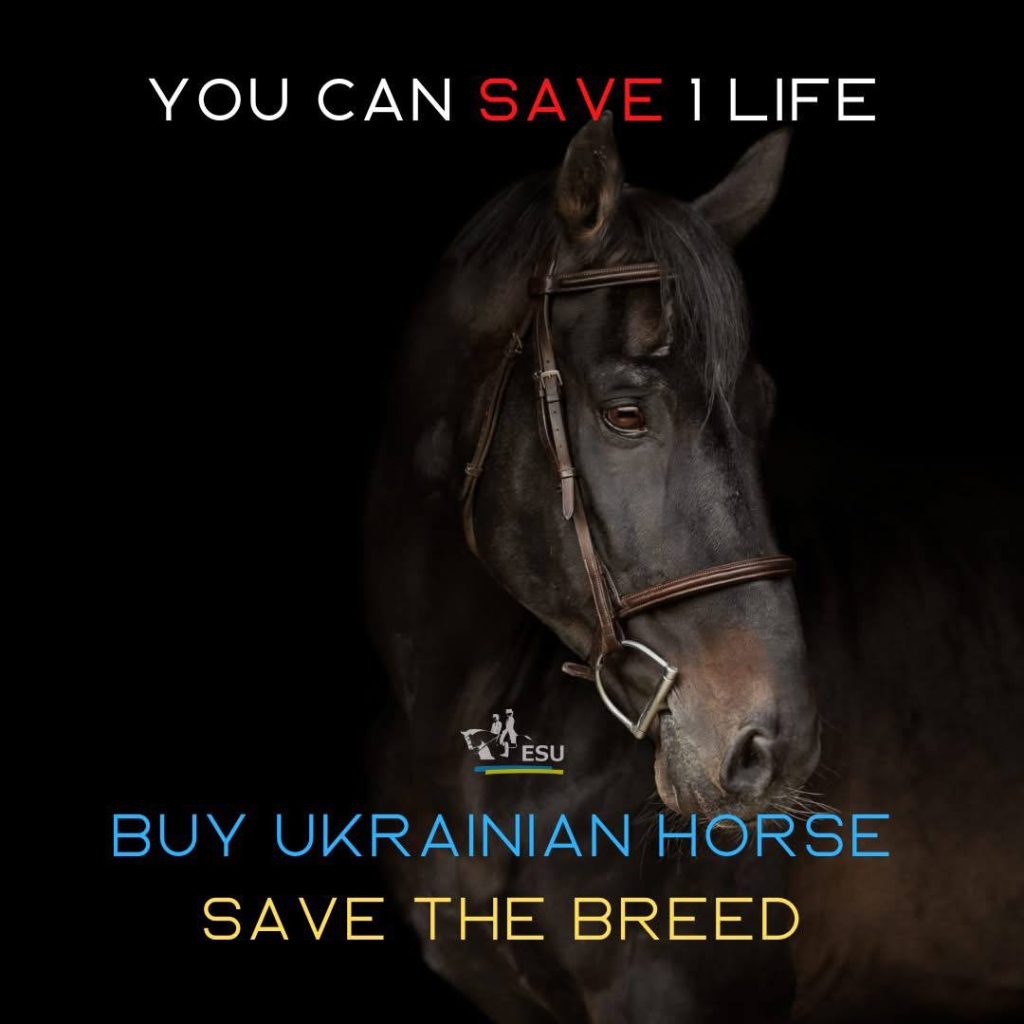
BUY UKRAINIAN HORSE. SAVE THE BREED

We are launching a campaign dedicated to attracting all horse sellers abroad to sell horses of the Ukrainian riding breed. In these difficult times, when due to the Russian invasion in Ukraine the leading studfarms of the ukrainian horses are under fire and hostilities, when not all horses can be taken to safe territories, and those that can be taken out have no necessary finances for their maintenance, we must take active actions.
Winter coming closer, when the war will end is unknown. Gasoline is getting more expensive, feed is getting more expensive, nobody knows what will happen next.
If we can do something, we must do it!
We want the Ukrainian riding breed to be known all over the world. About the elegance and intelligence of our horses. About their talents, about their wonderful movements and desire to cooperate with a person. About their beauty and Ukrainian endurance.
Many of them are already used to explosions and now it is difficult to scare them with anything.
We have a long list of Ukrainian riding horses for sale, there are showjumping horses, dressage horses, and hobby horses. For us, they are all like our own children. And we want more of our children to survive, have a decent life and be able to achieve success in sports. All are now discounted just to give them a chance to save themselves.
If you are the owner of a stable abroad, if you are engaged in breeding horses or an athlete who has many horses – we will be happy if there is a place in your stable for at least 1 horse of the Ukrainian riding breed. We are ready to offer you many options so that you can choose the best one for you. This will be a big step towards a meeting from the international equestrian society to the Ukrainian one. We are really proud of our horses and we are sure that they will not disappoint you.
You can write us a message through this page, sent letter on e-mail esuhorses@gmail.com or write
WhatsApp +32491126278, Viber/Telegram +380930033998
Everything will be Ukraine
************************************************************
КУПУЙ УКРАЇНСЬКУ ВЕРХОВУ!
ВРЯТУЙ ПОРОДУ
Ми запускаємо акцію присвячену залученню всіх продавців коней закордоном для продажу коней української верхової породи. В ці тяжкі часи коли провідні заводи УВП через російське вторгнення до України знаходяться під обстрілами і не всіх коней вдається вивезти на безпечні території, а тих, кого вдається вивезти необхідні фінанси для утримання, ми маємо робити активні дії.
Зима близько, коли закінчиться війна – невідомо. Бензин дорожчає, корма дорожчають, ніхто не знає що буде далі.
Якщо ми можемо щось зробити, ми маємо це робити!
Ми хочемо щоб про українську верхову породу дізналися в усьому світі. Про елегантність та інтелект наших коней. Про їх таланти, про їх чудові рухи та бажання співпрацювати з людиною. Про їх красу та українську витривалість.
Багато з них вже звикли до вибухів і тепер їх важко чимось налякати.
Ми маємо довгий список коней української верхової породи на продаж, це конкурні, це виїздкові, це коні хобі класу. Для нас всі вони як рідні діти. І ми хочемо щоб побільше наших дітей вижило, мало гідне життя і змогло досягнути успіхів в спорті. Зараз на всіх знижено ціни лише для того, щоб дати їм шанс врятуватися.
Якщо ви власник стайні закордоном, якщо ви займаєтеся розведенням коней або спортсмен що має багато коней – ми будемо щасливі якщо у вашій стайні знайдеться місце хоча б для одного коня української верхової породи. Ми готові запропонувати вам безліч варіантів щоб ви обрали кращий для вас. Це буде великим кроком на зустріч від міжнародного кінного суспільства до українського. Ми справді пишаємося нашими конями та впевнені що вони вас не розчарують.
Ви можете написали нам повідомлення на сторінці, на e-mail esuhorses@gmail.com
WhatsApp +32491126278, Viber/Telegram +380930033998
Все буде Україна
Posted on Leave a comment

Russian attack killed 7 horses in Kyiv region (18+)

Seven horses were killed in overnight September 7th shelling at the Endurance Horse Sport Club @enduranse_horse_sport_club near Kyiv. The stables were destroyed—people survived, but the animals did not. “After the first two hits, the horses were still alive—then the third drone finished them off,” the club owner @yuliatolpyga reports.

This attack came as part of russia’s largest overnight strike on non-frontline Ukrainian cities. Shahed drones and missiles rained down across the country: 805 drones and 13 missiles were launched, 751 intercepted, but dozens of targets were still struck in Kyiv, Odesa, Dnipro, Kryvyi Rih, and at least 37 other locations. Fires and destruction spread. A mother and her two-month-old son were killed when a residential building was hit. At least seven civilians died, including a young woman and a one-year-old child. Eighteen more were injured. Debris even struck the Cabinet of Ministers building—the first confirmed hit on a government HQ since the full-scale invasion began.

Repost @_mlnkkk19

“He never got the chance to become a little gray mouse.
I love you endlessly, my dear boy.
Life has torn us apart, but even death will not.

The direct strike of three Shaheds took the lives of six more horses besides Ars:
– Ra-Nazran (father of the little one, my sporting partner in 2021—we won first places at national and international competitions)
– Frosya (caught in 2022 after the occupation, she survived the hell of Bucha)
– Test (once saved by his owner from slaughter)
– Malakhita (who had been with her owners for more than 10 years)
– Maktum (the first son of my young horse’s mother, who survived today’s strike together with Holly—they are the only two left. He was my very first horse in endurance)
– Bosik (the baby who came to the stable a couple of months after I first started going there, and whom I, like the others, had known for over 7 years).

Now there is only an abyss inside all of us. The stable has suffered great destruction. Help is needed.”

Monobank link: https://send.monobank.ua/jar/3GUgyxnW3W

IBAN UA 50 322001 00000 2620 8363 6211 61

Repost materials from Instagram u24.gov.ua , ukrainciaga.international